The Rise of AI SEO
Search has changed. People no longer depend only on traditional blue links. They now ask questions directly to Google AI Overviews, Google AI Mode, ChatGPT, Gemini, Perplexity, Copilot, and other AI-powered answer engines.
This means businesses, bloggers, service providers, consultants, eCommerce brands, and local companies need a new approach to visibility. Traditional SEO is still important, but it is no longer enough to think only about ranking on page one of Google. Your content must also be clear, trustworthy, useful, well-structured, and easy for AI systems to understand, summarize, and cite.
This is where AI SEO comes in.
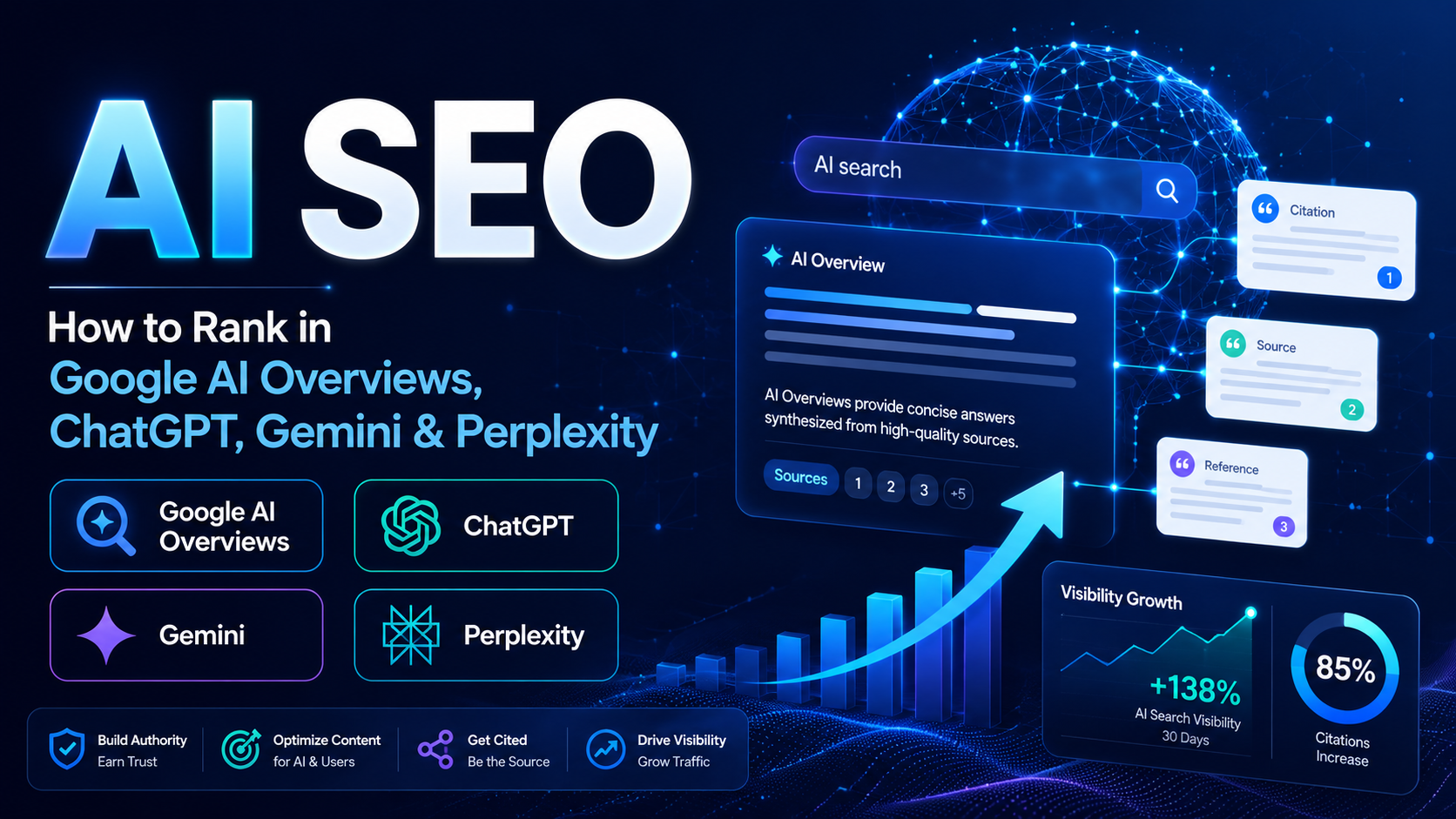
AI SEO is the process of optimizing your website, content, brand, and digital presence so that AI-powered search engines and answer engines can find, understand, trust, and recommend your business.
The goal is not only to rank in Google. The goal is to become the source that AI platforms use when they answer your target customers’ questions.
What Is AI SEO?
AI SEO means optimizing your website and online presence for AI-powered search experiences such as:
- Google AI Overviews
- Google AI Mode
- ChatGPT Search
- Google Gemini
- Perplexity
- Microsoft Copilot
- Voice assistants
- Answer engines
- AI agents and browser assistants
In traditional SEO, users search a keyword, scan search results, click a website, and read the answer.
In AI search, users often ask full questions such as:
- “What is the best local SEO strategy for a small business?”
- “How much does SEO cost for a service business?”
- “Which company provides reliable WordPress SEO support?”
- “What are the best pest control companies in Brisbane?”
- “How can I improve my Google Business Profile ranking?”
Instead of showing only a list of links, AI systems may generate a direct answer. That answer may include citations, sources, brand mentions, product recommendations, business names, service providers, or supporting links.
So the new question is not only:
“How do I rank on Google?”
The better question is:
“How do I become the trusted source AI uses when answering my customer’s question?”
Is Traditional SEO Dead?
No. SEO is not dead. SEO is evolving.
AI search still depends heavily on crawlable websites, indexed pages, structured content, trusted sources, topical relevance, authority, and user satisfaction. These are the same foundations that made traditional SEO work for years.
However, the presentation of search results is changing.
Before, the main goal was to rank in the top 10 organic results. Now, the goal is broader:
- Rank in organic search
- Appear in Google AI Overviews
- Get cited in ChatGPT Search
- Become a source in Perplexity answers
- Appear in Gemini-related sources
- Build brand mentions across the web
- Strengthen entity authority
- Improve trust signals
- Create content that AI can confidently summarize
Traditional SEO focuses on visibility in search engines. AI SEO focuses on visibility in search engines, answer engines, and AI assistants.
The strongest strategy is not SEO versus AI SEO. The strongest strategy is SEO plus AI SEO.
Why AI SEO Matters in 2026
AI search is changing how users discover information. Many users now want fast, direct, conversational answers. They do not always want to open 10 different websites to compare information manually.
This creates both a challenge and an opportunity.
The challenge is that some informational searches may receive fewer clicks because AI answers the question directly.
The opportunity is that AI search can expose your brand to users earlier in the decision-making journey. If your website becomes a trusted source, AI tools may mention, cite, summarize, or recommend your business even before the user visits your website.
For example, a user may ask:
- “Who is a good local SEO consultant for Australian businesses?”
- “What should I check before hiring an SEO expert?”
- “Which digital marketing consultant understands WordPress, Local SEO, and AI SEO?”
If your brand has strong topical authority, clear service pages, reviews, case studies, structured data, and consistent mentions across the web, AI systems have more signals to understand and trust your business.
That is why AI SEO matters.
It is no longer only about traffic. It is about visibility, authority, trust, and recommendation.
How AI Search Engines Choose Sources
Every AI search platform works differently, but most of them look for similar signals.
They want sources that are:
- Crawlable
- Indexable
- Relevant
- Clear
- Factually useful
- Fresh when freshness matters
- Trustworthy
- Supported by expertise
- Easy to extract and summarize
- Connected to a real brand or entity
- Consistent with other trusted sources
AI systems do not simply reward long content. They reward useful content.
A 3,000-word article with generic advice may perform worse than a 1,200-word article with original examples, expert insight, real data, screenshots, case studies, FAQs, and practical steps.
AI search engines need confidence. Your job is to reduce uncertainty.
You can do that by making your content clear, your brand credible, and your website technically accessible.
How to Rank in Google AI Overviews
Google AI Overviews appear when Google believes an AI-generated summary can help users understand a topic faster. These summaries may include links to supporting websites.
To improve your chance of appearing in Google AI Overviews, you need to follow strong SEO fundamentals and create content that answers questions better than generic pages.
1. Make Sure Your Pages Are Indexed
If Google cannot crawl, index, and show your page with a snippet, your chance of appearing in AI Overviews is very limited.
Check these basics:
- Your page is not blocked by robots.txt
- Your page does not have a noindex tag
- The canonical URL is correct
- The page is internally linked
- The page loads properly on mobile
- The page returns a 200 status code
- The main content is visible in HTML
- The page is included in your XML sitemap
- Google Search Console shows the page as indexed
AI SEO starts with technical SEO. If your website is technically weak, AI visibility will also be weak.
2. Create Helpful, Non-Generic Content
Google does not need another article that says the same thing as everyone else.
To rank in AI Overviews, your content should offer something unique. This can include:
- First-hand experience
- Original examples
- Real business insights
- Case studies
- Expert opinions
- Comparison tables
- Step-by-step processes
- Screenshots
- Checklists
- Local market knowledge
- Industry-specific recommendations
- Common mistakes and solutions
- Pricing explanations
- Before-and-after results
For example, instead of writing:
“SEO helps businesses grow online.”
Write:
“For a local service business, SEO helps generate leads from Google Search, Google Maps, AI Overviews, and brand discovery searches. A roofing company, pest control company, carpet cleaner, dentist, or consultant should not only optimize service pages but also build local proof through Google Business Profile, reviews, location pages, service schema, and real project examples.”
This is more useful because it gives context and practical value.
3. Answer the Main Question Early
AI systems often look for direct answers. Do not hide the answer too deep inside the page.
Use a clear structure:
- Ask the question in the heading
- Answer it directly in the first few lines
- Then explain in detail
- Add examples
- Add FAQs
- Add supporting information
For example:
What Is AI SEO?
AI SEO is the process of optimizing your website, content, brand, and online reputation so AI-powered search engines can find, understand, trust, and recommend your business in generated answers.
Then continue with a deeper explanation.
This format helps both users and AI systems.
4. Use Clear Headings and Content Structure
AI systems understand structured content better than messy content.
Use:
- One clear H1
- Logical H2 and H3 headings
- Short paragraphs
- Bullet points where helpful
- Descriptive subheadings
- FAQ sections
- Summary sections
- Tables only when useful
- Internal links
- Clear definitions
Avoid large blocks of text. AI systems and human readers both prefer clean structure.
A strong AI SEO page usually includes:
- Definition
- Why it matters
- How it works
- Step-by-step guide
- Examples
- Common mistakes
- Checklist
- FAQs
- Conclusion
5. Optimize for Query Fan-Out
AI search does not always answer only the exact query a user typed. It may run or consider related sub-questions.
For example, if someone searches:
“How to rank in AI Overviews?”
The related sub-questions may include:
- What is AI SEO?
- How does Google AI Overview choose sources?
- Does schema help AI Overviews?
- Is ChatGPT SEO different from Google SEO?
- How do I get cited by AI tools?
- Does Google Business Profile help AI search?
- How do reviews affect AI visibility?
Your content should naturally cover the full topic, not only one narrow keyword.
This does not mean creating 50 thin pages for every keyword variation. It means building a complete, helpful resource around the user’s real intent.
6. Add Strong E-E-A-T Signals
E-E-A-T stands for Experience, Expertise, Authoritativeness, and Trustworthiness.
For AI SEO, this is very important because AI systems prefer content that appears reliable and safe to recommend.
Add trust signals such as:
- Author bio
- Professional credentials
- Years of experience
- Real business address if applicable
- Client examples
- Case studies
- Reviews and testimonials
- Original images
- Company profile
- Contact details
- Editorial policy
- Privacy policy
- Terms page
- About page
- References where appropriate
If you are writing about SEO, show your SEO experience. If you are writing about legal, medical, tax, finance, or technical topics, expert review becomes even more important.
7. Use Schema Markup
Schema markup does not guarantee AI Overview visibility, but it helps search engines better understand your content and entities.
Useful schema types include:
- Organization schema
- LocalBusiness schema
- Person schema
- Article schema
- BlogPosting schema
- FAQPage schema
- Service schema
- Product schema
- Review schema
- BreadcrumbList schema
- VideoObject schema
- HowTo schema where appropriate
For a local SEO consultant, you may use:
- Person schema for the consultant
- Organization schema for the business
- ProfessionalService or LocalBusiness schema
- Service schema for SEO services
- Article schema for blog posts
- FAQ schema for common questions
- Review schema if valid and compliant
Schema should match visible content. Do not add fake reviews, fake ratings, or misleading structured data.
8. Improve Page Experience
AI search can bring users to your website. When they arrive, the page must be fast, clean, mobile-friendly, and easy to use.
Improve:
- Mobile responsiveness
- Page speed
- Core Web Vitals
- Font readability
- Visual layout
- Image compression
- Navigation
- Internal linking
- CTA placement
- Ad balance
- Content clarity
- Accessibility
A page that gives a poor user experience may struggle even if the content is good.
9. Add Original Images and Videos
Google’s AI search experiences can surface different types of content. Text is important, but images and videos can support your authority.
Add:
- Original screenshots
- Process diagrams
- Infographics
- Explainer videos
- Short clips
- Before-and-after images
- Team photos
- Project images
- Local business photos
- Custom graphics
For example, an article about AI SEO can include an infographic showing:
Traditional SEO → AI SEO → GEO → AEO → Entity SEO → Brand Authority
Original media makes your content more valuable and less generic.
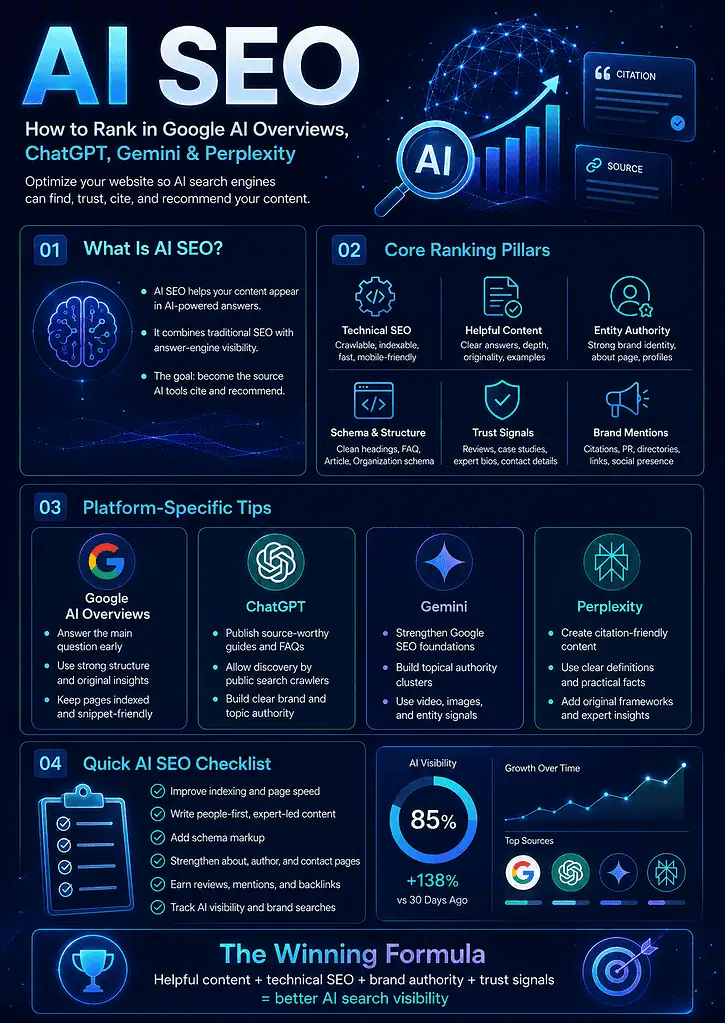
How to Rank in ChatGPT Search
ChatGPT Search can show timely answers with links to web sources. To improve visibility in ChatGPT, you need to make your website accessible, useful, and clearly connected to your topics.
1. Allow OAI-SearchBot
If you want your website to appear in ChatGPT Search results, make sure your robots.txt file is not blocking OAI-SearchBot.
A simple robots.txt check is important.
Avoid blocking important AI search crawlers unless you have a clear reason. If you block them, your content may be less discoverable in AI search experiences.
2. Build Clear, Source-Worthy Content
ChatGPT often works best with pages that clearly answer a specific question.
Create pages that are easy to cite, such as:
- Complete guides
- Definitions
- Comparison articles
- Step-by-step tutorials
- FAQs
- Industry explainers
- Data-backed posts
- Case studies
- Pricing guides
- Service guides
- Local market guides
For example:
- “Complete Local SEO Checklist for Small Businesses”
- “How to Optimize Google Business Profile for Service Businesses”
- “AI SEO vs Traditional SEO: Complete Comparison”
- “WordPress Technical SEO Checklist”
- “Best Schema Types for Local Business Websites”
These pages are more likely to be useful as sources than generic landing pages.
3. Strengthen Your Brand Entity
ChatGPT and other AI systems need to understand your brand.
Make sure your brand information is consistent across:
- Website
- About page
- Contact page
- Google Business Profile
- Facebook page
- YouTube channel
- Crunchbase or business directories if relevant
- Local citations
- Guest posts
- Press releases
- Podcast mentions
- Author profiles
- Industry directories
Your brand should have a clear identity:
- Who you are
- What you do
- Who you serve
- Where you operate
- Why you are credible
- What services you provide
- What proof supports your expertise
If AI systems cannot understand your entity, they are less likely to recommend you confidently.
4. Publish Expert-Level Content
ChatGPT is often used for research, comparison, planning, and decision-making. So your content should help users make better decisions.
Good ChatGPT-friendly content includes:
- Pros and cons
- Use cases
- Mistakes to avoid
- Expert commentary
- Real examples
- Cost factors
- Decision frameworks
- Step-by-step implementation
- Tool comparisons
- Industry-specific advice
For example, instead of writing only “Why SEO is important,” write:
“How a Local Business Can Use SEO, Google Business Profile, Reviews, Schema, and AI Search to Generate More Leads”
That type of article gives ChatGPT more context to reference.
5. Keep Important Content Fresh
ChatGPT Search may look for up-to-date sources when the topic changes quickly.
Update pages about:
- AI SEO
- Google algorithm updates
- Search Console changes
- Schema guidelines
- Digital marketing trends
- Tool comparisons
- Pricing guides
- Local SEO ranking factors
- WordPress SEO plugins
- AI search platforms
Add a “Last updated” date when appropriate. Refresh outdated examples, screenshots, tools, and recommendations.
How to Rank in Google Gemini
Gemini is Google’s AI assistant. It may show related sources and web links in some responses. Since Gemini is part of Google’s broader AI ecosystem, your Google SEO foundation matters strongly.
1. Focus on Google Search Visibility
If you want visibility in Gemini-related source links, your Google Search presence matters.
Improve:
- Indexing
- Helpful content
- Entity clarity
- Schema
- Internal linking
- Topical authority
- Google Business Profile
- Reviews
- YouTube presence
- Image SEO
- Video SEO
Google’s ecosystem is connected. Your website, Google Business Profile, YouTube channel, reviews, Knowledge Panel, and brand mentions all help create a stronger digital entity.
2. Build Topical Authority
Gemini needs to understand what your website is about.
If your website is about SEO and digital marketing, build strong topic clusters around:
- AI SEO
- Local SEO
- WordPress SEO
- Technical SEO
- Google Business Profile
- Schema markup
- Content marketing
- Core Web Vitals
- SEO audits
- Digital marketing strategy
- Online reputation management
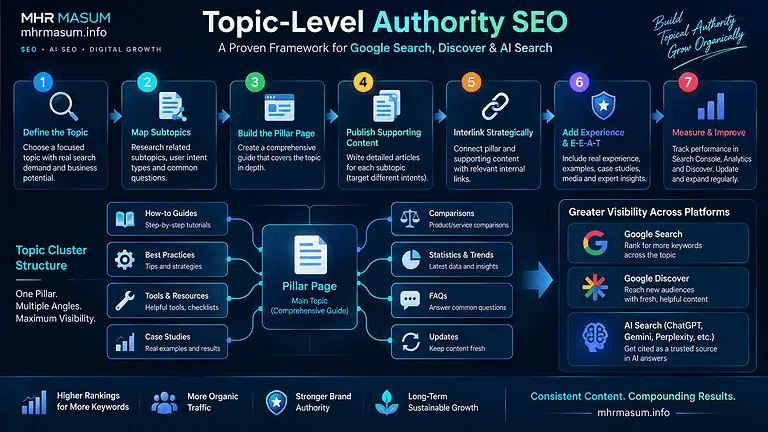
Each cluster should have a main pillar page and supporting articles.
Example:
- Pillar page: Complete Guide to Local SEO
- Supporting articles:
- Google Business Profile Optimization Checklist
- How to Get More Google Reviews
- LocalBusiness Schema Guide
- Local SEO for Service Area Businesses
- Local SEO Mistakes to Avoid
- How to Rank in Google Maps
This helps AI systems understand your area of expertise.
3. Optimize YouTube and Visual Content
Gemini and Google can connect information from different content formats. If your business produces videos, optimize them properly.
Use:
- Keyword-focused video titles
- Clear descriptions
- Chapters
- Transcripts
- Custom thumbnails
- Schema
- Embedded videos in blog posts
- Supporting blog content
- Internal links from video pages
For SEO consultants and agencies, video content can be powerful because it demonstrates expertise and trust.
4. Improve Your Knowledge Graph Signals
Knowledge Graph optimization helps Google understand your brand as an entity.
Improve these elements:
- Consistent business name
- Consistent logo
- Consistent social profiles
- Organization schema
- SameAs links
- Author pages
- About page
- Contact page
- Business citations
- Google Business Profile
- Wikidata or Wikipedia only if genuinely eligible
- Press mentions
- Podcast appearances
- Client case studies
The goal is simple: make it easy for Google and Gemini to understand who you are and why you are relevant.
How to Rank in Perplexity
Perplexity is an AI answer engine that commonly provides cited answers. Users often use it for research, product discovery, comparisons, and fast learning.
To rank or get cited in Perplexity, your content should be source-worthy, clear, and reliable.
1. Create Citation-Friendly Content
Perplexity needs sources that support answers. Your content should make claims clearly and back them up.
Good formats include:
- Research-style blog posts
- Step-by-step guides
- Comparison pages
- Industry reports
- Statistics pages
- Original research
- Case studies
- Definitions
- Tool lists
- Local guides
- FAQs
Each section should be easy to extract and cite.
For example:
Bad format:
“SEO is great for all businesses and helps them grow fast.”
Better format:
“SEO helps businesses improve organic visibility by making their pages easier for search engines to crawl, understand, rank, and display for relevant user queries.”
The second version is more precise and source-friendly.
2. Use Clear Facts and Definitions
AI answer engines prefer clear statements.
Add definitions such as:
- What is AI SEO?
- What is GEO?
- What is AEO?
- What is entity SEO?
- What is Google AI Overview?
- What is ChatGPT Search?
- What is LocalBusiness schema?
Definitions are often used in AI-generated answers.
3. Publish Original Insights
Perplexity and similar tools are useful for research. If your website only repeats common information, it has less value as a cited source.
Add original elements:
- Your own checklist
- Your own framework
- Your own process
- Your own case study
- Your own observations
- Your own examples
- Your own screenshots
- Your own templates
- Your own data
- Your own expert commentary
For example, you can create a framework like:
The AI SEO Visibility Framework:
- Crawlability
- Content clarity
- Entity authority
- Trust signals
- Brand mentions
- Structured data
- Freshness
- User experience
- Conversion readiness
This kind of original structure makes your content more memorable and useful.
4. Build External Mentions
AI search does not only look at your website. It may also consider what the wider web says about your brand.
Build mentions from:
- Industry blogs
- Guest posts
- Business directories
- Podcast interviews
- YouTube videos
- LinkedIn articles
- Press releases
- Review platforms
- Local citations
- Partner websites
- Client websites
- Case study pages
The more your brand appears in relevant trusted places, the easier it becomes for AI systems to understand your authority.
Here is a practical AI SEO framework you can follow.
AI SEO Strategy: Step-by-Step Framework
Step 1: Audit Your Technical SEO
Before creating new content, check whether your site is technically ready.
Audit:
- Indexing
- Robots.txt
- XML sitemap
- Canonical tags
- Redirects
- Broken links
- Mobile usability
- Page speed
- Core Web Vitals
- Structured data errors
- Internal linking
- Duplicate content
- JavaScript rendering
- Thin pages
- Orphan pages
AI search visibility begins with search accessibility.
Step 2: Audit Your Existing Content
Review your current pages and classify them.
Keep and improve:
- Pages with traffic
- Pages with rankings
- Pages with backlinks
- Pages with conversions
- Pages with strong topical relevance
Update:
- Outdated posts
- Thin content
- Old service pages
- Weak FAQs
- Poorly structured guides
- Pages missing examples
- Pages missing author information
Remove or merge:
- Duplicate pages
- Low-quality AI content
- Near-identical location pages
- Outdated announcements
- Irrelevant posts
Your content library should be clean, useful, and trustworthy.
Step 3: Build Topic Clusters
AI systems need to understand your topical authority.
Choose your main topics and build clusters.
Example for an SEO consultant:
- Main topic: AI SEO
- Supporting topics:
- Google AI Overviews
- ChatGPT SEO
- Gemini SEO
- Perplexity SEO
- AEO
- GEO
- Entity SEO
- Schema for AI search
- AI content quality
- AI search tracking
- Main topic: Local SEO
- Supporting topics:
- Google Business Profile
- Local citations
- Reviews
- LocalBusiness schema
- Service area pages
- Map pack ranking
- Local SEO audit
- Local SEO for roofers
- Local SEO for pest control
- Local SEO for carpet cleaners
This creates depth and authority.
Step 4: Optimize Every Important Page for Clear Answers
Every important page should answer:
- What is this page about?
- Who is it for?
- What problem does it solve?
- Why should the user trust this content?
- What should the user do next?
Add:
- Short definition
- Clear explanation
- Benefits
- Process
- Examples
- FAQs
- CTA
- Internal links
- Author info
This helps both humans and AI systems.
Step 5: Add Entity and Trust Signals
For business websites, add:
- Detailed About page
- Founder profile
- Team page
- Service pages
- Contact details
- Business address
- Phone number
- Google map
- Social links
- Client logos
- Testimonials
- Case studies
- Awards
- Certifications
- Media mentions
- Privacy policy
- Terms of use
- Disclaimer
- Cookie policy
For personal brands, add:
- Professional bio
- Experience summary
- Portfolio
- Client results
- Case studies
- Speaking or publication history
- LinkedIn profile
- Author pages
- Personal brand schema
- SameAs links
AI systems need to know that the website represents a real and credible entity.
Step 6: Use Structured Data Properly
Add schema where relevant.
Recommended schema for most business websites:
- Organization
- LocalBusiness
- ProfessionalService
- Person
- WebSite
- WebPage
- BreadcrumbList
- Article
- FAQPage
- Service
- Review
- VideoObject
For WordPress websites, schema can be added with SEO plugins or custom JSON-LD.
But remember: schema should support real visible content. Do not use fake ratings, fake reviews, or misleading markup.
Step 7: Improve Brand Mentions
Brand mentions matter in AI SEO.
Create visibility through:
- Guest posts
- Digital PR
- Business profiles
- LinkedIn articles
- YouTube videos
- Podcast features
- Client case studies
- Partnership pages
- Local directories
- Industry directories
- Press releases
- Niche citations
For example, if you provide SEO services for Australian businesses, your brand should appear in Australian business directories, marketing content, client websites, and relevant local SEO discussions.
AI systems trust brands that are visible across the web.
Step 8: Optimize for Local AI Search
For local businesses, AI SEO and Local SEO must work together.
Optimize:
- Google Business Profile
- Business name
- Categories
- Services
- Products
- Photos
- Reviews
- Review responses
- Business description
- Opening hours
- Service areas
- Website service pages
- Local citations
- LocalBusiness schema
- Location pages
- Local FAQs
- Driving direction content
- Local backlinks
AI tools may answer local queries by combining information from business profiles, websites, reviews, directories, and third-party mentions.
A local business with poor reviews, weak service pages, and inconsistent NAP details will struggle in AI search.
Step 9: Create Content That Deserves to Be Cited
Ask this before publishing:
- Does this content say something useful?
- Does it answer the query clearly?
- Does it provide examples?
- Does it include expert insight?
- Does it solve a real problem?
- Is it better than the top-ranking pages?
- Would another website or AI tool cite this page?
- Is the author credible?
- Is the page updated?
- Is the content easy to understand?
If the answer is no, improve the page before publishing.
Step 10: Track AI Visibility
AI SEO tracking is still developing, but you can monitor signals manually and with tools.
Track:
- Google rankings
- Google Search Console impressions
- AI Overview appearances
- Branded search growth
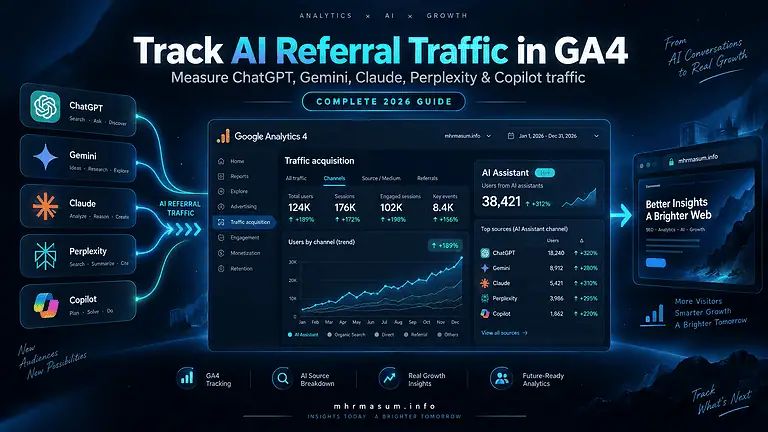
- Referral traffic from AI platforms
- Bing traffic
- ChatGPT referral traffic
- Perplexity referral traffic
- Direct traffic
- Brand mentions
- Featured snippets
- People Also Ask visibility
- Local pack rankings
- Review growth
- Knowledge Panel changes
Also test prompts manually.
For example, search in AI tools:
- “Best SEO consultant for local businesses”
- “How to hire an SEO consultant”
- “Best local SEO strategy for service businesses”
- “What is AI SEO?”
- “How to optimize for Google AI Overviews?”
- “Who provides WordPress SEO services?”
Check whether your brand appears, whether your content is cited, and which competitors are mentioned.
AI SEO Content Formula
A strong AI SEO article should follow this structure:
1. Clear Title
Use a title that matches real user intent.
Example:
AI SEO: How to Rank in Google AI Overviews, ChatGPT, Gemini and Perplexity
2. Direct Introduction
Explain the problem and promise the solution.
3. Simple Definition
Define the topic clearly.
4. Detailed Explanation
Explain how it works.
5. Platform-Specific Sections
Cover Google AI Overviews, ChatGPT, Gemini, and Perplexity separately.
6. Practical Checklist
Give users something they can apply.
7. Examples
Use real business examples.
8. FAQs
Answer common questions.
9. Conclusion
Summarize the main point and add a CTA.
This format works well because it is useful for both people and AI systems.
Common AI SEO Mistakes to Avoid
Mistake 1: Publishing Generic AI Content
AI-written content is not automatically bad. But generic AI content with no expertise, no examples, no originality, and no real value will struggle.
Do not publish content just because it is long.
Publish content because it helps.
Mistake 2: Ignoring Technical SEO
If your site has crawl errors, indexing problems, slow speed, poor mobile design, or broken schema, AI visibility will suffer.
Technical SEO is still the foundation.
Mistake 3: Creating Too Many Thin Pages
Do not create hundreds of weak pages for every keyword variation.
For example:
- AI SEO for businesses
- AI SEO for companies
- AI SEO for startups
- AI SEO for agencies
- AI SEO for consultants
If the pages say almost the same thing, they may dilute quality.
Create strong, useful, complete pages instead.
Mistake 4: Forgetting Brand Authority
AI SEO is not only about articles. It is also about brand trust.
A business with strong reviews, client proof, citations, press mentions, and expert content has a better chance of being recommended than a brand with no external validation.
Mistake 5: Overusing Schema Without Real Content
Schema helps search engines understand your page. But schema cannot replace quality content.
Do not rely only on technical markup. Build real value.
Mistake 6: Not Updating Old Content
AI search often needs fresh information for fast-changing topics.
Update your important pages regularly, especially for SEO, AI, technology, legal, finance, health, and marketing topics.
AI SEO Checklist
Use this checklist to optimize your website for AI search.
Technical SEO Checklist
- Website is crawlable
- Important pages are indexed
- Robots.txt is clean
- XML sitemap is updated
- Canonical tags are correct
- No important page has noindex
- Mobile design works properly
- Page speed is optimized
- Core Web Vitals are improved
- Schema has no major errors
- Internal links are strong
- Broken links are fixed
- Duplicate content is reduced
Content Checklist
- Page answers the main question clearly
- Content is original and useful
- Intro gives a direct answer
- Headings are well structured
- Examples are included
- FAQs are included
- Author expertise is shown
- Content is updated
- Images or videos support the topic
- Internal links are added
- CTA is clear
Entity SEO Checklist
- About page is complete
- Contact page is complete
- Business details are consistent
- Founder or author bio is available
- Organization schema is added
- Person schema is added where relevant
- Social profiles are connected
- Google Business Profile is optimized
- Reviews are visible
- Case studies are published
- Brand mentions are growing
AI Search Checklist
- OAI-SearchBot is not blocked if ChatGPT visibility is desired
- Googlebot can crawl important pages
- Important pages are eligible for snippets
- Content is easy to summarize
- Definitions are clear
- Claims are accurate
- Sources and examples are included
- Topic clusters are complete
- Brand authority is visible
- AI visibility is tested manually
Best Content Types for AI SEO
The best content types for AI SEO include:
- Complete guides
- How-to articles
- FAQ pages
- Comparison articles
- Best-of lists
- Case studies
- Original research
- Glossary pages
- Service pages
- Local landing pages
- Industry reports
- Tool reviews
- Checklists
- Templates
- Pricing guides
- Problem-solution articles
For example, an SEO consultant can publish:
- AI SEO Complete Guide
- Local SEO Checklist
- Google Business Profile Optimization Guide
- Schema Markup for Local Business
- WordPress Technical SEO Audit Checklist
- SEO Cost Guide
- SEO for Small Business
- How to Rank in Google Maps
- How to Improve E-E-A-T
- How to Optimize for ChatGPT Search
These content types answer real user questions and give AI systems strong source material.
AI SEO for Local Businesses
Local businesses should pay special attention to AI SEO.
AI tools may influence how people choose:
- Roofers
- Pest control companies
- Carpet cleaners
- Dentists
- Law firms
- Accountants
- Restaurants
- Hotels
- Tour operators
- Real estate agents
- Marketing consultants
- Cleaning companies
- Home service providers
For local AI visibility, optimize:
- Google Business Profile
- Reviews
- Service pages
- Location pages
- Local citations
- Photos
- Business descriptions
- Opening hours
- FAQs
- Local schema
- Local backlinks
- Community mentions
- Social profiles
Example:
A carpet cleaning company in Brisbane should not only have a homepage. It should have clear service pages for carpet cleaning, rug cleaning, upholstery cleaning, stain removal, end-of-lease cleaning, and suburb/service-area pages where appropriate.
It should also have reviews, before-and-after photos, FAQs, pricing guidance, and LocalBusiness schema.
This helps Google, AI Overviews, and other AI tools understand the business better.
AI SEO for Personal Brands and Consultants
AI SEO is especially powerful for consultants, freelancers, coaches, and experts.
If you are an SEO consultant, digital marketing consultant, WordPress expert, business advisor, lawyer, accountant, doctor, trainer, or coach, your personal brand can become a strong entity.
Optimize:
- Personal website
- About page
- Portfolio
- Case studies
- LinkedIn profile
- Author bio
- Client testimonials
- YouTube videos
- Podcast appearances
- Guest posts
- Professional photos
- Schema markup
- Social profiles
- Knowledge panel signals
Your name should be associated with your expertise across multiple trusted sources.
For example:
“Mohammad Harunur Rashid is an SEO and Digital Marketing Consultant with long-term experience in Local SEO, WordPress SEO, AI SEO, and business growth strategy.”
This kind of clear entity positioning helps search engines and AI systems understand who you are.
Future of SEO: From Keywords to Answers, Entities and Trust
SEO used to be mostly about keywords and backlinks.
Modern SEO is about much more:
- User intent
- Content quality
- Entity understanding
- Brand trust
- Topical authority
- Technical accessibility
- Structured data
- User experience
- Reviews
- Real-world proof
- AI citation potential
Keywords are still useful, but they are no longer the full strategy.
The future of SEO is about becoming the best answer.
If your website gives the clearest, most useful, most trustworthy answer, you have a stronger chance of being visible across Google, AI Overviews, ChatGPT, Gemini, Perplexity, and future AI search platforms.
FAQs About AI SEO
What is AI SEO?
AI SEO is the process of optimizing your website, content, brand, and online presence so AI-powered search engines and answer engines can find, understand, cite, and recommend your business.
Is AI SEO different from traditional SEO?
Yes and no. The foundation is still traditional SEO: crawlability, indexing, content quality, authority, and user experience. But AI SEO also focuses on answer visibility, entity trust, structured content, brand mentions, and citation potential.
How do I rank in Google AI Overviews?
To improve your chance of appearing in Google AI Overviews, make sure your pages are indexed, eligible for snippets, technically strong, helpful, original, well-structured, and supported by trust signals.
How do I appear in ChatGPT Search?
Make sure your website is public, crawlable, useful, and not blocking important AI search crawlers such as OAI-SearchBot. Create clear, source-worthy content that answers real user questions.
Does schema help AI SEO?
Schema helps search engines understand your content and entities. It does not guarantee AI visibility, but it supports a strong SEO foundation.
What is GEO?
GEO stands for Generative Engine Optimization. It focuses on improving visibility in generative AI search engines and AI-generated answers.
What is AEO?
AEO stands for Answer Engine Optimization. It focuses on optimizing content so answer engines can extract and present useful answers.
Can AI-written content rank?
AI-assisted content can rank if it is helpful, accurate, original, edited by humans, and created for users. Generic AI content with no expertise or value will struggle.
Do backlinks still matter for AI SEO?
Yes, links and mentions still help build authority. However, brand mentions, citations, reviews, entity signals, and content quality are also very important.
Is AI SEO important for local businesses?
Yes. Local businesses need AI SEO because users may ask AI tools for recommendations, comparisons, and service providers. Google Business Profile, reviews, local content, citations, and local schema are very important.
Conclusion
AI SEO is not a replacement for traditional SEO. It is the next evolution of SEO.
To rank in Google AI Overviews, ChatGPT, Gemini, and Perplexity, your website must be technically strong, content-rich, trustworthy, and easy for AI systems to understand.
Focus on:
- Helpful content
- Clear answers
- Strong technical SEO
- Entity authority
- Brand trust
- Schema markup
- Reviews and proof
- Fresh information
- Topic clusters
- Local SEO signals
- External mentions
The businesses that win in AI search will not be the ones that publish the most content. They will be the ones that publish the most useful, trustworthy, and clearly structured content.
If you want long-term visibility, do not chase AI SEO hacks. Build a brand, create expert content, improve your website, and become the source AI search engines can trust.