A business website can look professional, explain its services, and include excellent products without consistently generating enquiries, sales, or qualified traffic.
The problem is often not the quality of the business. The problem is that potential customers cannot find it when they search for relevant solutions.
An experienced SEO consultant helps close this gap.
An SEO consultant evaluates how customers search, how search engines understand the website, where competitors are gaining visibility, and which technical, content, authority, or conversion problems are limiting growth.
The consultant then develops a practical strategy to help the business:
- Reach customers actively searching for its products or services
- Improve visibility across traditional and AI-driven search
- Attract more commercially relevant website visitors
- Generate qualified leads and online sales
- Improve local search and Google Maps performance
- Strengthen website quality and technical performance
- Build authority within the target market
- Reduce dependency on paid advertising
- Improve conversion pathways
- Measure the commercial impact of SEO
SEO is not simply about placing keywords on a website or achieving a higher position for one search phrase.
Google defines SEO as helping search engines understand content while helping users find a website and decide whether they should visit it. Google also explains that SEO best practices can make websites easier to crawl, index, and understand, but no legitimate method can automatically guarantee first position.
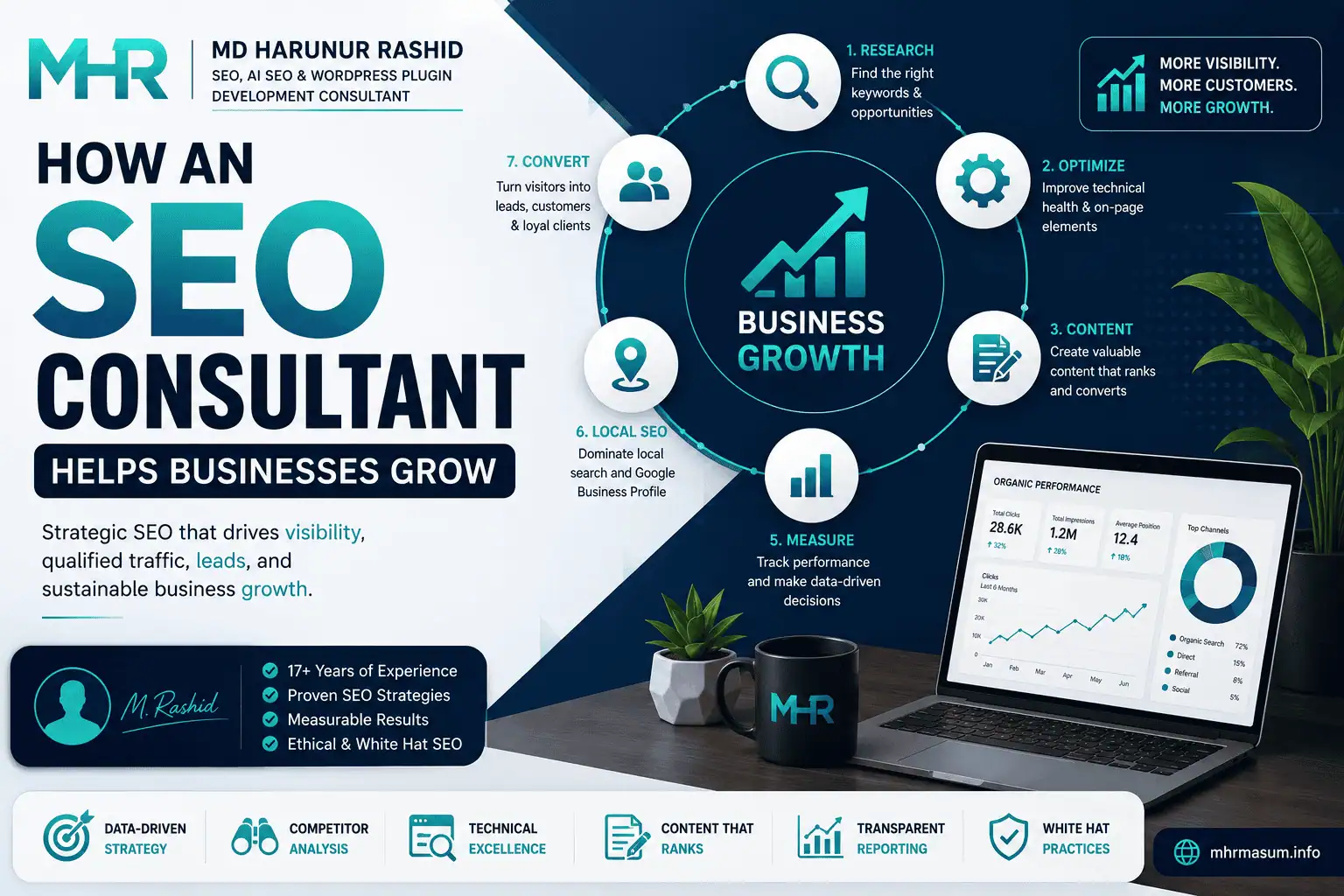
A professional SEO consultant connects search visibility with wider business objectives such as revenue, customer acquisition, brand growth, customer retention, and return on investment.
What Is an SEO Consultant?
An SEO consultant is a specialist who analyses, plans, recommends, implements, and measures strategies designed to improve a website’s organic search performance.
Unlike someone who works only on individual tasks, such as writing blog posts or building links, a consultant should understand how the different parts of SEO affect one another.
These areas may include:
- Business and competitor research
- Keyword research
- Search-intent analysis
- Technical SEO
- On-page optimization
- Content strategy
- Local SEO
- eCommerce SEO
- Internal linking
- Structured data
- Entity SEO
- Digital authority
- AI search visibility
- Website speed
- User experience
- Conversion tracking
- Performance reporting
- Core-update recovery
The consultant’s responsibility is not merely to generate a list of recommendations. A capable consultant should explain why each action matters, which tasks should receive priority, what resources are required, and how progress will be measured.
Google’s official guidance says a good SEO should be interested in the business itself, including what makes it unique, who its competitors are, how customers currently find it, and how search visibility can support commercial objectives.
This business understanding distinguishes strategic SEO consulting from generic optimization.
Why Businesses Need SEO Consulting
Business owners frequently understand their products and customers very well but may not have the technical knowledge, research tools, implementation experience, or time required to manage SEO effectively.
SEO also involves several disciplines that must work together.
For example, a business may have strong content but weak website architecture. Another business may have excellent services but no local landing pages. An eCommerce store may have hundreds of products but duplicate URLs, poor product descriptions, missing structured data, and slow category pages.
An SEO consultant identifies these connected problems and prioritizes the changes that are most likely to improve business performance.
Hiring professional help can be particularly valuable when a business is:
- Launching a new website
- Redesigning or migrating an existing website
- Entering a competitive market
- Expanding into new locations
- Launching new products or services
- Losing rankings or traffic
- Recovering from a Google update
- Experiencing indexing problems
- Investing in content without results
- Receiving traffic but few conversions
- Preparing for AI search
- Managing a large WordPress or WooCommerce website
Google specifically recommends involving an SEO early when planning a website redesign or launching a new website so that search-friendly foundations can be built from the beginning. Google also notes that a good SEO can improve an existing website.
An SEO Consultant Connects SEO with Business Objectives
One of the most valuable contributions an SEO consultant makes is connecting optimization work with measurable business outcomes.
A weak SEO objective might be:
Increase website traffic.
A stronger objective might be:
Increase qualified organic enquiries for Technical SEO and Local SEO services while reducing the average cost of acquiring a new customer.
The second objective helps determine:
- Which keywords matter
- Which pages should be optimized
- Which traffic is commercially relevant
- Which conversions must be tracked
- Which services deserve priority
- How success should be evaluated
An SEO consultant should ask questions such as:
- Which products or services generate the highest profit?
- Which locations are most valuable?
- Which customers are the best fit?
- Which services have available capacity?
- Which enquiries frequently become customers?
- What is the average transaction or contract value?
- What is the customer acquisition cost?
- Which marketing channels are already working?
- What prevents prospects from converting?
The answers ensure that SEO investment supports the direction of the business rather than chasing traffic with little financial value.
An SEO Consultant Audits the Current Website
Before recommending major changes, an SEO consultant should understand the website’s current condition.
A comprehensive audit evaluates whether search engines can discover, crawl, render, index, understand, and rank the website effectively.
The audit may cover:
- Indexing status
- Crawlability
- XML sitemaps
- Robots.txt
- Canonical tags
- Redirects
- Broken links
- Duplicate content
- Website architecture
- Mobile usability
- Core Web Vitals
- Page speed
- JavaScript rendering
- Structured data
- Internal linking
- Metadata
- Content quality
- Backlink quality
- Local SEO signals
- Conversion paths
The objective is not to create the longest possible list of errors.
A useful audit separates findings into categories such as:
- Critical problems
- High-impact opportunities
- Medium-priority improvements
- Low-priority observations
- Issues that do not require action
This prevents the business from spending time and money fixing minor items while serious commercial or technical problems remain unresolved.
Google recommends that an SEO audit provide realistic estimates of potential improvement and explain the work required. Google also warns businesses to avoid consultants who guarantee first position in search results.
Use my detailed Technical SEO Checklist for WordPress Websites to understand the main areas a professional website audit should examine.
An SEO Consultant Conducts Market and Competitor Research
SEO growth does not happen in isolation. A business competes with other websites, marketplaces, directories, local listings, publishers, and increasingly AI-generated answers.
An SEO consultant analyses competitors to understand:
- Which keywords they rank for
- Which pages attract search demand
- How their websites are structured
- Which topics they cover
- Which locations they target
- What authority signals they possess
- How they present their services
- Which backlinks support their rankings
- Where their strategies are weak
- Which opportunities they have overlooked
The purpose is not to copy competitors.
Competitor research helps the business identify gaps and develop a stronger position.
For example, competitors may all publish short service pages with limited practical information. A business could differentiate itself through detailed service processes, case studies, original data, pricing guidance, comparison content, and clearer evidence of expertise.
The consultant should also distinguish between business competitors and search competitors.
A local agency may consider another agency its main commercial competitor, but Google search results may also contain:
- National brands
- Directories
- Software platforms
- News websites
- Government resources
- YouTube videos
- Community discussions
- AI-generated answers
Understanding the complete search landscape helps create a realistic strategy.
An SEO Consultant Finds What Customers Are Searching For
Keyword research is not simply the process of collecting search phrases with high volume.
A professional consultant investigates the language customers use at different stages of their journey.
These stages can include:
- Recognizing a problem
- Researching possible solutions
- Comparing providers
- Evaluating costs
- Looking for evidence
- Making contact
- Purchasing
For example, a business owner experiencing declining traffic might search for:
- Why did my Google rankings drop?
- How to recover after a Google core update
- Technical SEO audit service
- SEO consultant for traffic recovery
- Hire an SEO expert
Each search reflects a different level of awareness and commercial intent.
An SEO consultant groups keywords by:
- Topic
- Intent
- location
- Customer type
- Funnel stage
- Product or service
- Commercial value
- Ranking difficulty
- Existing visibility
This research helps determine whether the business needs:
- A service page
- A product page
- A category page
- A location page
- A comparison guide
- A case study
- An educational article
- A frequently asked questions section
The consultant should avoid recommending a separate low-quality page for every small keyword variation.
Google states that its systems can understand synonyms and meaning, and it advises website owners to focus on useful content rather than creating large numbers of pages designed to manipulate rankings or AI-generated responses.
An SEO Consultant Targets Commercial Search Intent
Traffic alone does not grow a business. The right traffic does.
A website may attract thousands of visitors through broad informational topics while generating very few enquiries. Another website may attract fewer visitors through commercially relevant searches and generate significantly more revenue.
An SEO consultant evaluates search intent to identify which queries indicate that a potential customer is preparing to act.
Informational Search Intent
Informational searches usually indicate that the user wants to learn something.
Examples include:
- What is Local SEO?
- Why is website speed important?
- How does AI SEO work?
- What causes duplicate content?
These searches can support brand awareness and demonstrate expertise.
Commercial Investigation Intent
Commercial investigation searches indicate that the user is comparing options.
Examples include:
- Best SEO consultant for small businesses
- SEO consultant versus SEO agency
- Local SEO service pricing
- Best WordPress speed optimization company
These searches can generate valuable prospects when supported by comparison pages, case studies, reviews, and clear service information.
Transactional Intent
Transactional searches indicate that a user may be ready to contact or purchase.
Examples include:
- Hire an SEO consultant
- Request a Technical SEO audit
- Local SEO consultant near me
- WordPress speed optimization service
- WooCommerce SEO specialist
An effective strategy balances informational authority with commercial pages that help visitors take the next step.
An SEO Consultant Improves Website Architecture
Website architecture determines how content, categories, products, services, and locations are organized.
A clear structure helps:
- Users find relevant information
- Search engines discover pages
- Internal authority flow through links
- Important pages receive prominence
- Topic relationships become understandable
- Duplicate and isolated content are reduced
A confusing website may have:
- Important services hidden several clicks deep
- Blog articles disconnected from commercial pages
- Multiple pages targeting the same topic
- Products accessible through unnecessary parameter URLs
- Location pages with no logical parent category
- Orphan pages with no internal links
- Duplicate category and tag archives
An SEO consultant may recommend a structure such as:
- Home
- Services
- Technical SEO
- Local SEO
- AI SEO
- WooCommerce SEO
- WordPress Optimization
- Industries
- Locations
- Case Studies
- Resources
- About
- Contact
The exact architecture should reflect the business model, available content, and customer journey.
Google’s SEO Starter Guide explains that descriptive URLs, logical organization, useful navigation, and internal links can help users and search engines understand a website.
An SEO Consultant Fixes Technical SEO Problems
Technical SEO creates the foundation that allows content and authority to produce results.
A technically weak website may prevent search engines from accessing or understanding pages even when the content is excellent.
Common technical problems include:
- Pages blocked from crawling
- Accidental
noindexdirectives - Incorrect canonical tags
- Redirect chains
- Redirect loops
- Broken internal links
- Duplicate URL parameters
- Missing XML sitemap entries
- JavaScript content that fails to render
- Soft 404 pages
- Server errors
- Slow response times
- Mobile layout problems
- Incorrect hreflang
- Structured data errors
- Unsecured resources
Google explains that crawling and indexing determine how its systems find and process website content. A page must satisfy technical requirements before it can be eligible to appear in search.
An SEO consultant works with the website owner, developer, hosting provider, or internal team to diagnose these issues and verify that fixes are implemented correctly.
My Technical SEO and Keyword Research portfolio provides examples of how technical and search-demand analysis can support business growth.
An SEO Consultant Improves Website Speed and User Experience
Website speed influences how easily visitors can browse, compare, complete forms, and purchase.
A slow website can waste the visibility generated by SEO.
Visitors may leave when:
- The main content takes too long to appear
- Buttons respond slowly
- Images move the page while loading
- Forms freeze
- Mobile menus fail
- Checkout becomes unresponsive
- Pop-ups block the content
Google’s Core Web Vitals evaluate real-world loading performance, responsiveness, and visual stability. Google recommends achieving good Core Web Vitals for search success and a positive user experience, while clarifying that good scores alone do not guarantee top rankings.
An SEO consultant may identify performance problems related to:
- Hosting
- WordPress plugins
- Page builders
- Themes
- Large images
- Unused scripts
- Third-party widgets
- Font loading
- Cache configuration
- Database size
- Content delivery networks
The consultant may not personally perform every development task, but should be able to identify priorities, explain their impact, and coordinate implementation.
See practical examples in my Website Speed Optimization portfolio.
An SEO Consultant Develops a Content Strategy
Content should support the questions, needs, objections, and decisions customers experience throughout their journey.
An SEO consultant develops a strategy that connects informational content with commercial outcomes.
A complete strategy may include:
- Core service pages
- Product and category content
- Local landing pages
- Educational guides
- Comparison pages
- Case studies
- Frequently asked questions
- Industry-specific resources
- Original research
- Visual content
- Downloadable resources
- Email content
- Content updates
The consultant identifies which topics should be created, updated, consolidated, redirected, or removed.
Content Should Demonstrate Real Expertise
Google’s systems are designed to prioritize helpful and reliable information created to benefit people. Google recommends original analysis, comprehensive explanations, and additional value rather than merely rewriting existing sources.
An experienced consultant helps the business turn its real knowledge into useful content.
This may include:
- Customer questions
- Common mistakes
- Practical processes
- Industry experience
- Case-study evidence
- Original screenshots
- Testing results
- Professional opinions
- Limitations and trade-offs
This type of content is more difficult for competitors or generic AI systems to reproduce.
Read Why Generic AI Content Does Not Rank Anymore for a detailed explanation of why originality and professional input matter.
Content Should Support Business Services
A blog should not operate as an isolated publishing area.
An SEO consultant connects relevant articles to:
- Service pages
- Product pages
- Case studies
- Portfolio examples
- Contact pages
- Other supporting guides
For example, an article about diagnosing ranking losses can naturally link to a Technical SEO service, a recovery checklist, and relevant case studies.
This helps readers move from education to evaluation and action.
An SEO Consultant Improves On-Page SEO
On-page SEO helps search engines and users understand the purpose and relevance of an individual page.
An SEO consultant reviews and improves elements such as:
- Page title
- Meta description
- Main heading
- Subheadings
- Page introduction
- Search intent alignment
- Content depth
- Internal links
- Image alt text
- URL structure
- Structured data
- Calls to action
The objective is not to repeat keywords unnaturally.
A well-optimized service page should clearly communicate:
- What the service is
- Who it is for
- Which problems it solves
- What the process includes
- Why the provider is credible
- What the customer should do next
Google warns against keyword stuffing and confirms that the meta keywords tag is not used by Google Search.
A consultant should focus on relevance, clarity, usefulness, and natural language rather than outdated tactics.
An SEO Consultant Creates an Internal Linking Strategy
Internal links connect related pages within the same website.
They help users discover useful content while helping search engines understand:
- Page relationships
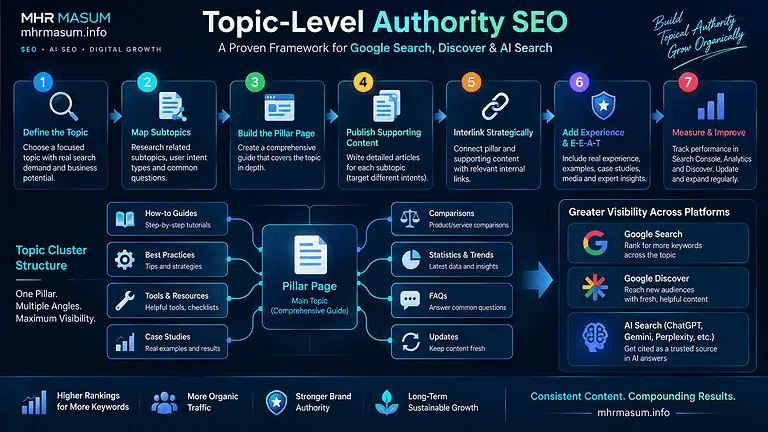
- Topic clusters
- Website hierarchy
- Important pages
- Supporting content
An SEO consultant may identify:
- Pages with no internal links
- Overlinked pages
- Weak anchor text
- Important services buried in the website
- Articles that should link to commercial pages
- Topic clusters that need better connections
- Outdated links
- Broken links
For example, a complete AI SEO cluster could connect:
- AI SEO for Google AI Overviews, ChatGPT, Gemini and Perplexity
- Entity SEO
- GEO vs AEO vs SEO
- Brand Authority for AI Search
- Agentic SEO
These connections help users explore the subject while establishing clearer topical relationships.
An SEO Consultant Strengthens Local SEO
Local SEO helps businesses attract customers within specific geographic areas.
It is particularly valuable for:
- Contractors
- Consultants
- Medical practices
- Restaurants
- Retail stores
- Hotels
- Lawyers
- Accountants
- Cleaning businesses
- Property services
- Automotive businesses
- Home-service providers
An SEO consultant may improve:
- Google Business Profile
- Business categories
- Services
- Contact details
- Opening hours
- Service areas
- Business description
- Photos
- Reviews
- Local landing pages
- Local citations
- Local schema
- Location-based internal links
Google states that complete and accurate Business Profile information can make a business more likely to appear for relevant local searches. Google identifies relevance, distance, and prominence as major considerations in local results.
A consultant should also make sure the website supports the information published in the Business Profile.
For example, if a company lists roofing repair as a service, the website should contain a detailed roofing repair page with relevant service-area information.
Use my Local SEO in 2026 guide to understand the complete process.
Practical examples include my:
An SEO Consultant Builds a Review Strategy
Reviews influence trust, conversion decisions, and local visibility.
An SEO consultant can help the business create an ethical process for requesting, monitoring, and responding to reviews.
A review strategy may include:
- Identifying the correct point in the customer journey
- Sending a direct review link
- Making the request simple
- Responding professionally
- Monitoring recurring feedback
- Displaying selected reviews on the website
- Avoiding fake or incentivized reviews
Google advises businesses to respond to reviews in a conversational and useful way rather than using every response as an advertisement.
Reviews also provide language that customers naturally use to describe services, outcomes, and locations. This can help a consultant understand how the market perceives the business.
Read How Reviews Help Local SEO and AI Search Visibility for a more detailed framework.
An SEO Consultant Supports eCommerce Growth
eCommerce SEO involves more than optimizing individual product titles.
A consultant evaluates the complete online-store structure, including:
- Product categories
- Product pages
- Filters
- Variations
- Pagination
- Internal search
- Product schema
- Merchant Center data
- Stock status
- Product images
- Reviews
- Shipping information
- Return policies
- Checkout performance
Common eCommerce SEO problems include:
- Manufacturer descriptions copied across websites
- Thin category pages
- Duplicate variant URLs
- Out-of-stock products removed incorrectly
- Filter combinations creating crawl waste
- Missing product identifiers
- Inconsistent prices
- Slow mobile pages
- Weak internal links
An SEO consultant creates a strategy that balances indexability, user experience, and product discovery.
The consultant may also identify commercially valuable product searches and recommend supporting content such as:
- Buying guides
- Product comparisons
- Compatibility guides
- Brand pages
- Use-case articles
- Frequently asked questions
These resources can attract customers before they have selected a specific product.
An SEO Consultant Builds Website Authority
Technical optimization and content may not be sufficient in highly competitive markets.
Search engines also evaluate signals that can help establish whether a website is trusted and recognized within its subject area.
An SEO consultant may help build authority through:
- Digital public relations
- Relevant backlinks
- Industry directories
- Partnerships
- Expert contributions
- Original research
- Case studies
- Community involvement
- Professional profiles
- Brand mentions
A legitimate authority strategy focuses on relevance and quality.
It should avoid:
- Automated link building
- Low-quality guest-post networks
- Paid links designed to manipulate rankings
- Private blog networks
- Irrelevant directory submissions
- Comment spam
- Fake mentions
Google’s Search Essentials explain that websites focused on useful content and positive user experiences are more likely to perform well, while manipulative tactics may violate spam policies.
A consultant should explain where links come from, why they are relevant, and which risks are involved.
An SEO Consultant Strengthens Entity SEO
Entity SEO helps search and AI systems understand the people, organizations, services, products, locations, and relationships represented on a website.
For a professional consultant or business, entity clarity may depend on:
- Consistent business name
- Clear About page
- Author biographies
- Contact information
- Organization schema
- Person schema
- Social profiles
- Service descriptions
- Portfolio evidence
- Case studies
- Reviews
- External references
An SEO consultant identifies inconsistencies that may create ambiguity.
For example, a business may use different names across:
- Website
- Google Business Profile
- Directories
- Structured data
- Press mentions
The consultant helps standardize these signals and connect them logically.
Read Entity SEO: The Missing Part of Modern SEO for a complete entity optimization framework.
An SEO Consultant Prepares the Business for AI Search
Search behaviour now extends beyond traditional blue links.
Customers may discover businesses through:
- Google AI Overviews
- Google AI Mode
- ChatGPT
- Gemini
- Perplexity
- Copilot
- Other answer engines
An SEO consultant helps prepare the website for these environments without abandoning traditional SEO foundations.
Google confirms that its generative AI search experiences remain connected to its core Search ranking and quality systems. Google recommends clear technical structure, original expert-led content, useful page experience, accurate business information, and normal SEO best practices.
AI search preparation may include:
- Improving entity clarity
- Publishing original expertise
- Building topic clusters
- Adding supporting evidence
- Strengthening authorship
- Improving crawlability
- Using structured data accurately
- Creating useful images and video
- Building brand mentions
- Monitoring generative AI visibility
A consultant should avoid unsupported shortcuts such as claiming that an llms.txt file or special AI schema will guarantee Google AI visibility. Google states that it does not use llms.txt for Google Search and that no special schema is required for its generative AI search features.
Read How to Build Brand Authority for AI Search for strategies that strengthen visibility beyond traditional rankings.
An SEO Consultant Helps Prepare Websites for AI Agents
AI agents may increasingly help users compare products, request quotes, check availability, make reservations, and complete other website tasks.
An SEO consultant working with developers and designers can evaluate whether important website journeys are understandable and operable by automated systems.
This may involve:
- Semantic HTML
- Accessible forms
- Clear buttons
- Stable layouts
- Descriptive field labels
- Visible error messages
- Clear success confirmations
- Structured product data
- Secure approval steps
Google’s current AI-search guidance notes that browser agents may interpret screenshots, DOM structure, and the accessibility tree when interacting with websites.
This emerging area is explained in detail in my Agentic SEO guide.
An SEO Consultant Improves Conversion Opportunities
Higher rankings do not automatically generate more customers.
A website may attract qualified visitors but lose them because:
- The offer is unclear
- Contact information is difficult to find
- The form is too long
- The page lacks trust evidence
- The mobile experience is poor
- Calls to action are weak
- Service information is incomplete
- Pricing expectations are unclear
- The website loads slowly
An SEO consultant reviews what happens after the visitor arrives.
This may involve improving:
- Page introductions
- Service descriptions
- Calls to action
- Contact forms
- Trust signals
- Case studies
- Reviews
- Mobile usability
- Conversion tracking
- Internal pathways
The consultant should not replace a dedicated conversion-rate specialist when advanced experimentation is required, but SEO recommendations should still consider commercial outcomes.
A business does not benefit from visibility if visitors cannot understand the offer or complete the next step.
An SEO Consultant Sets Up Accurate Measurement
SEO cannot be managed effectively without reliable data.
An SEO consultant may configure or review:
- Google Search Console
- Google Analytics 4
- Google Tag Manager
- Google Business Profile performance
- Call tracking
- Form tracking
- eCommerce tracking
- CRM attribution
- Looker Studio dashboards
- Server logs
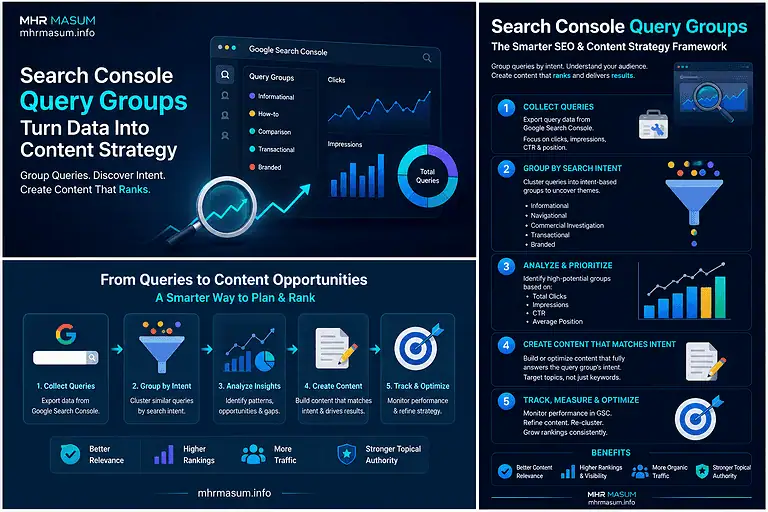
Google Search Console’s Performance report shows how search visibility changes over time and provides information about queries, pages, countries, devices, clicks, impressions, CTR, and position.
A consultant uses this data to answer questions such as:
- Which pages are growing?
- Which keywords generate qualified traffic?
- Which locations are improving?
- Which pages have visibility but weak CTR?
- Which device types perform poorly?
- Which content has declined?
- Which queries create conversions?
- Which services generate revenue?
Measurement should extend beyond rankings.
A complete reporting framework may include:
- Qualified organic leads
- Organic sales
- Conversion rate
- Revenue
- Customer acquisition cost
- Average customer value
- Assisted conversions
- Local calls
- Appointment bookings
- Branded searches
An SEO Consultant Creates Meaningful Reports
SEO reports should explain what happened, why it matters, and what should happen next.
A weak report may contain dozens of screenshots without interpretation.
A useful report should include:
- Work completed
- Technical issues resolved
- Search visibility changes
- Traffic changes
- Lead or sales changes
- Strongest pages
- Weakest pages
- Market opportunities
- Risks
- Priorities for the next period
The consultant should distinguish between correlation and causation.
For example, traffic may rise after a content update, but the change could also be influenced by seasonality, market demand, competitor changes, or a Google update.
Transparent reporting builds trust and prevents exaggerated claims.
An SEO Consultant Helps Diagnose Traffic and Ranking Drops
A sudden decline in traffic can have several causes.
Possible explanations include:
- Google core update
- Spam update
- Technical deployment
- Website migration
- Indexing problem
- Manual action
- Robots.txt change
- Incorrect canonical tags
- Server outage
- Competitor improvement
- Seasonal demand
- Lost backlinks
- Content-quality reassessment
An SEO consultant compares:
- Google update timelines
- Search Console data
- Analytics data
- Indexing reports
- Server logs
- Page changes
- Competitor performance
- Technical implementation
The consultant should avoid making major changes before identifying the likely cause.
Google recommends assessing affected pages and queries when reviewing traffic drops and evaluating whether content provides original, comprehensive, and useful information.
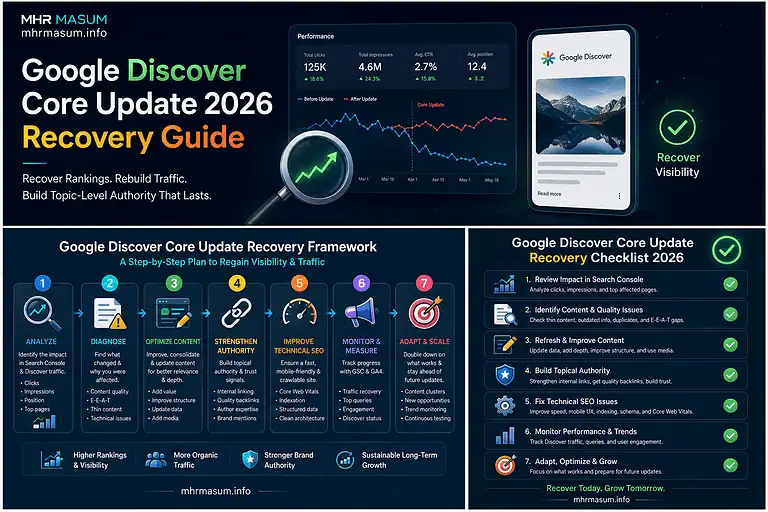
Use my Google Core Update Recovery Checklist to follow a structured diagnosis and recovery process.
An SEO Consultant Reduces Dependency on Paid Advertising
Paid advertising can generate immediate exposure, but traffic generally declines when the advertising budget is stopped.
SEO can create assets that continue generating visibility over a longer period.
These assets may include:
- Service pages
- Product pages
- Local landing pages
- Articles
- Comparison resources
- Case studies
- Videos
- Images
- Google Business Profile
- Brand authority
This does not mean SEO should always replace paid advertising.
SEO and paid media can support each other.
Paid advertising can help:
- Test offers
- Generate immediate demand
- Reach new audiences
- Support launches
SEO can help:
- Build durable visibility
- Reduce long-term acquisition dependency
- Capture informational and commercial demand
- Strengthen brand searches
- Support customer research
A consultant should recommend the channel mix that best matches the business rather than claiming that SEO is the only useful marketing activity.
Google confirms that paying for Google Ads does not directly improve organic rankings. Organic inclusion and advertising are separate systems.
An SEO Consultant Improves Long-Term Marketing ROI
SEO can produce compounding value because one optimized page may continue attracting customers over time.
The return may come from:
- Organic leads
- Online sales
- Local calls
- Bookings
- Email subscribers
- Brand searches
- Referral traffic
- Assisted conversions
- AI-search visibility
A simplified SEO ROI formula is:
SEO ROI = (Profit Attributable to SEO − SEO Cost) ÷ SEO Cost × 100
Relevant SEO costs may include:
- Consultant fees
- Content creation
- Development
- Tools
- Design
- Internal staff time
- Outreach
- Hosting improvements
The return should be based on profit where possible, not only revenue.
For a complete profitability framework, read How to Generate More ROI for Your Business.
SEO Consultant vs SEO Agency vs In-House SEO
Businesses can access SEO expertise through several working models.
The best option depends on budget, website size, implementation needs, and internal resources.
SEO Consultant
An SEO consultant usually provides strategy, audits, prioritization, implementation guidance, and specialist expertise.
A consultant may be suitable when the business needs:
- Senior strategic input
- Independent analysis
- A detailed roadmap
- Oversight of internal teams
- Technical problem-solving
- Flexible support
- Direct communication
SEO Agency
An agency may provide a wider delivery team that includes:
- SEO specialists
- Content writers
- Developers
- Designers
- Digital PR specialists
- Account managers
An agency may be appropriate for businesses requiring large-scale execution across multiple disciplines.
In-House SEO Specialist
An in-house specialist works directly within the company.
This model can provide:
- Deep business familiarity
- Faster internal communication
- Continuous access to teams
- Long-term ownership
However, one in-house specialist may still require external technical, content, development, or strategic support.
Hybrid Model
Many businesses use a hybrid model.
An experienced consultant may create the strategy and oversee performance while internal staff, agencies, writers, or developers execute specific tasks.
This structure can provide strategic expertise without requiring every service from one supplier.
What Should an SEO Consultant Deliver?
Deliverables depend on the business and engagement, but a professional consulting relationship may include:
- SEO audit
- Competitor analysis
- Keyword research
- Search-intent mapping
- Technical recommendations
- Website architecture
- Content strategy
- Content briefs
- On-page recommendations
- Internal-linking plan
- Local SEO strategy
- Structured data recommendations
- Analytics setup
- Reporting dashboard
- Implementation support
- Monthly roadmap
- Team training
Every deliverable should connect to a clear business or search objective.
A list of keywords without page mapping is incomplete.
An audit without implementation priorities is difficult to use.
A monthly report without commercial interpretation provides limited value.
How Long Does SEO Consulting Take to Produce Results?
SEO timelines depend on:
- Website history
- Competition
- Market demand
- Technical condition
- Content quality
- Authority
- Resources
- Implementation speed
- Google recrawling and reprocessing
- Seasonality
Some technical changes may be reflected relatively quickly. Competitive rankings and authority growth may require several months.
Google explains that some changes can be reflected within hours, while others may take several months. Google generally recommends allowing at least a few weeks before evaluating whether changes have produced a beneficial effect.
A responsible consultant should provide realistic expectations rather than a guaranteed date or position.
How to Choose the Right SEO Consultant
The right consultant should demonstrate strategic thinking, technical knowledge, communication skills, and an understanding of business outcomes.
Review Relevant Experience
Ask whether the consultant has experience with:
- Your platform
- Your business model
- Your industry
- Your location
- Your website size
- Your main SEO problems
A WordPress service business requires different experience from an international marketplace or a large eCommerce store.
Request Case Studies and Examples
Review whether previous work demonstrates:
- Clear problems
- Actions taken
- Measurable outcomes
- Relevant experience
- Transparent limitations
My portfolio contains examples across Technical SEO, Local SEO, WordPress optimization, website speed, and digital growth.
Ask How Success Will Be Measured
The consultant should be able to explain which metrics will be used.
These may include:
- Qualified traffic
- Leads
- Sales
- Visibility
- Search Console performance
- Local actions
- Conversion rate
- Revenue
- Profit
- Customer acquisition cost
Google recommends asking prospective SEO providers what results they expect, how long those results may take, and how success will be measured.
Ask How Changes Will Be Communicated
A consultant should document:
- Recommendations
- Implementation details
- Reasoning
- Risks
- Expected impact
- Completed changes
The business should understand what is being changed on its website.
Start with Appropriate Access
During an initial audit, the consultant may only need read access to platforms such as Search Console and Analytics.
Google advises businesses to grant Search Console read access during the audit stage rather than immediately providing unrestricted control.
Administrative access can be expanded when implementation responsibilities are agreed.
SEO Consultant Warning Signs
Businesses should be cautious when a consultant:
- Guarantees first position
- Promises instant results
- Refuses to explain methods
- Focuses only on backlinks
- Uses automated content without review
- Recommends hundreds of thin pages
- Buys low-quality links
- Reports only rankings
- Ignores business objectives
- Requests unnecessary access
- Cannot provide examples
- Uses fear to force decisions
SEO involves uncertainty because search engines, competitors, markets, and user behaviour continually change.
A trustworthy consultant explains this uncertainty while still providing a clear plan.
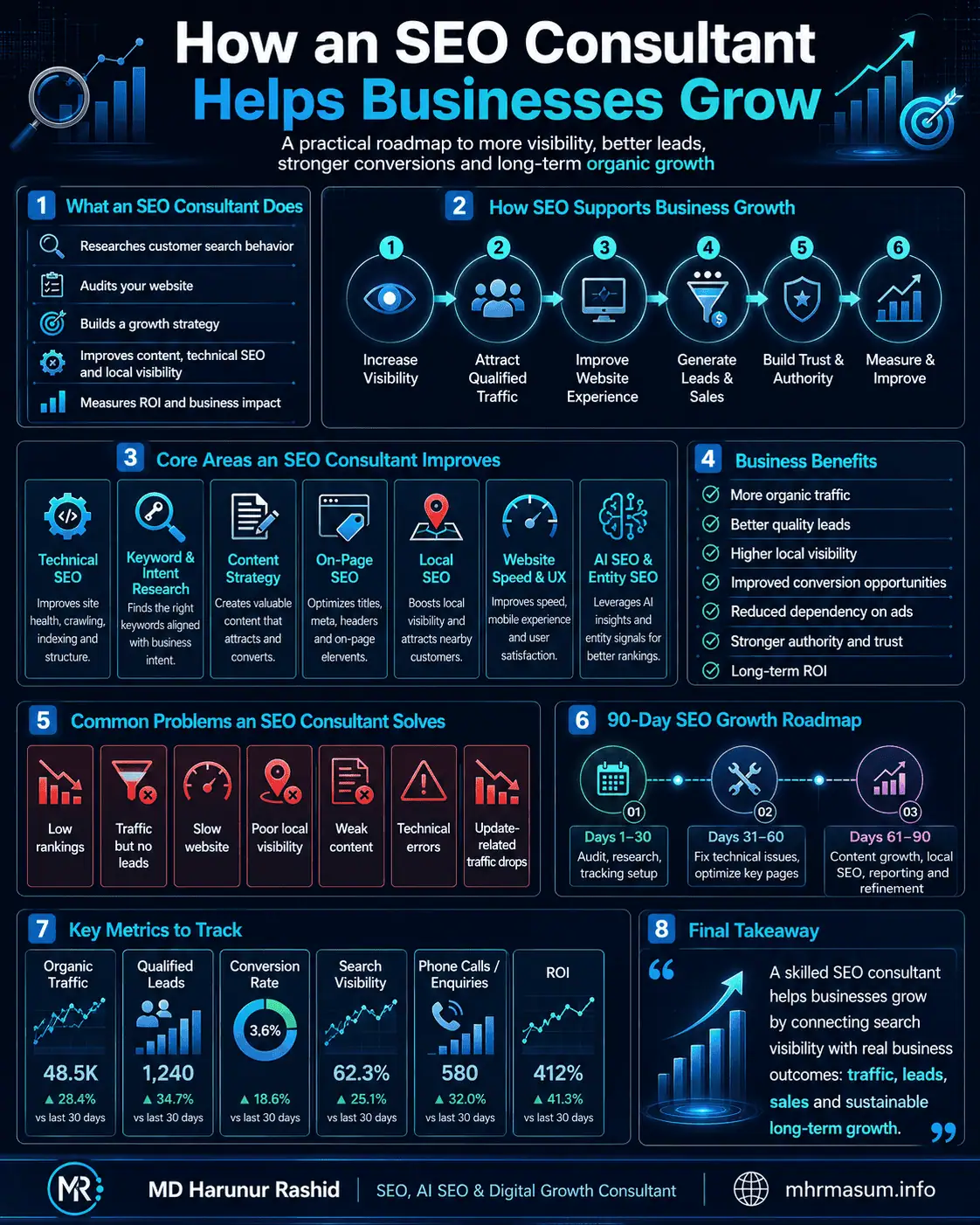
A 90-Day SEO Consultant Growth Roadmap
A structured 90-day plan can help a business establish strong SEO foundations and begin implementing priority improvements.
Days 1–30: Research, Audit and Measurement
The first phase establishes the current position of the business.
The consultant may complete:
- Business discovery
- Website audit
- Search Console review
- Analytics review
- Competitor research
- Keyword research
- Search-intent analysis
- Content inventory
- Backlink review
- Local SEO audit
- Conversion tracking review
The output should include a prioritized roadmap rather than only a problem list.
Days 31–60: Technical and On-Page Improvements
The second phase addresses high-impact website issues.
This may include:
- Indexing fixes
- Canonical corrections
- Redirect improvements
- Sitemap updates
- Website-speed work
- Mobile fixes
- Metadata improvements
- Service-page optimization
- Internal linking
- Structured data
- Google Business Profile improvements
The exact order should depend on business impact and implementation resources.
Days 61–90: Content, Authority and Growth
The third phase begins expanding visibility and building long-term assets.
This may include:
- New commercial pages
- Content updates
- New expert articles
- Case studies
- Local landing pages
- Review acquisition
- Authority building
- AI SEO improvements
- Conversion improvements
- Monthly reporting
After 90 days, the consultant should refine the roadmap using actual performance data.
Frequently Asked Questions About SEO Consultants
The following questions address common concerns businesses have before hiring an SEO consultant.
What Does an SEO Consultant Do?
An SEO consultant analyses a website, market, competitors, customer search behaviour, and technical performance.
The consultant then develops and helps implement strategies to improve organic visibility, qualified traffic, leads, sales, and long-term digital growth.
Can an SEO Consultant Guarantee First Position?
No responsible consultant can guarantee first position.
Google explicitly advises businesses to avoid SEO providers who guarantee first place in search results.
Is an SEO Consultant Worth Hiring?
An SEO consultant can be valuable when the business lacks internal expertise, has technical or ranking problems, wants to grow organic acquisition, or needs an independent strategy.
The value depends on the consultant’s expertise, the business opportunity, and whether recommendations are implemented.
How Much Does an SEO Consultant Cost?
SEO consultant fees vary according to:
- Experience
- Website size
- Competition
- Scope
- Technical complexity
- Location
- Implementation responsibility
- Reporting requirements
The lowest-priced option is not always the most cost-effective.
Poor SEO can waste resources or create long-term problems.
Does a Small Business Need an SEO Consultant?
A small business may be able to manage basic SEO internally.
However, professional support can be useful when the market is competitive, the website has technical problems, the business serves multiple locations, or internal time is limited.
Google recommends that small businesses understand basic SEO even when they decide to hire professional support.
Can an SEO Consultant Help Local Businesses?
Yes. A consultant can improve Google Business Profile, local landing pages, citations, reviews, local schema, and location-based website content.
Can an SEO Consultant Help eCommerce Businesses?
Yes. eCommerce SEO consultants can improve category structure, product pages, crawling, indexing, product data, internal linking, Merchant Center integration, and shopping-oriented content.
Does an SEO Consultant Create Content?
Some consultants write content directly, while others create strategy, briefs, editorial standards, and optimization recommendations for writers.
The working arrangement should be clarified before the project begins.
Can an SEO Consultant Fix a Google Penalty?
A consultant can diagnose manual actions, spam-related issues, technical problems, or core-update losses and recommend recovery work.
Recovery cannot be guaranteed because Google ultimately determines how pages are evaluated and displayed.
Does SEO Still Matter with AI Search?
Yes. Google confirms that its generative AI search features are rooted in its core Search ranking and quality systems. Foundational SEO remains relevant to both traditional and AI-driven search.
How Often Should I Speak with My SEO Consultant?
Communication frequency depends on the project.
Monthly strategy and reporting meetings are common, while active migrations, redesigns, or technical projects may require more frequent communication.
Final Thoughts on How an SEO Consultant Helps Businesses Grow
An SEO consultant does much more than improve rankings.
The consultant helps a business understand customer demand, remove technical barriers, improve content, build authority, strengthen local visibility, prepare for AI search, and convert organic visibility into measurable commercial outcomes.
The greatest value comes from connecting SEO with:
- Business objectives
- Profitable services
- Qualified customers
- Conversion pathways
- Sales data
- Customer lifetime value
- Long-term brand authority
SEO growth is not created by isolated shortcuts.
It is created through consistent improvements across website quality, technical performance, content, relevance, authority, trust, measurement, and user experience.
MD Harunur Rashid is an SEO, AI SEO and Digital Growth Consultant with 17+ years of experience helping local businesses, eCommerce brands, agencies, and website owners improve organic visibility through Local SEO, Technical SEO, WooCommerce SEO, WordPress optimization, AI-ready content systems, and custom WordPress plugin development.
Explore my complete SEO and Digital Growth Services, learn more about MD Harunur Rashid, review completed work in my portfolio, or contact MD Harunur Rashid to discuss a practical SEO strategy for your business.